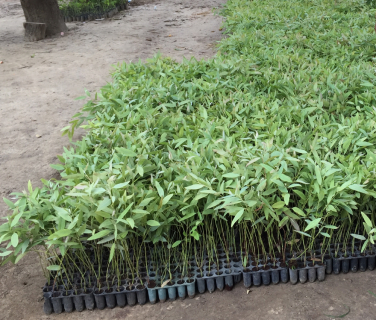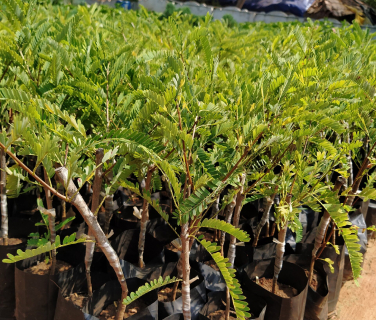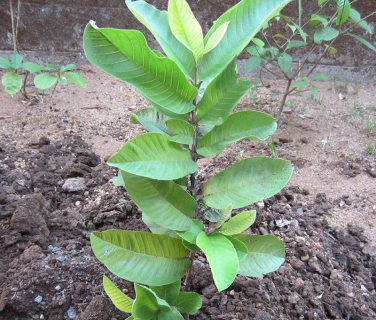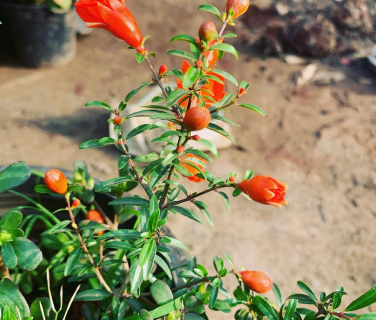
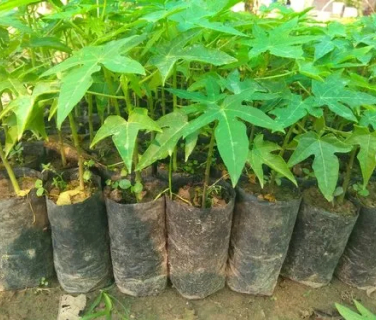
Papaya plants

Papaya plants

Papaya plants

papayas look like trees; they are actually perennial herbs with hollow trunks. These branchless plants grow to 20 to 30 feet tall with 1-foot-long to 3 1/2-foot-long leaves growing directly from the trunk. Papayas are relatively fragile plants, with several common diseases, fungi and insects that can injure or kill them. Papayas require careful inspection and care of these conditions.

Papayas Planting & Care

  • Fill the container to about 3 inches from the top of the container. Choose containers with a capacity of at least 10 gallons to ensure enough room for papayas to thrive. The container must have drainage holes in the bottom so that excess moisture in the soil can escape. You can drill holes in the bottom, using a power drill and a 1/2-inch diameter drill bit.Gather seeds from a mature papaya fruit to start the papaya tree.
  • Press the seeds against a colander to break the gelatinous sarcotesta sac, and rinse the seeds thoroughly. Steep the seeds in boiling hot water for 10 to 20 seconds, then soak them overnight in room-temperature water. While this step is not required, it helps speed up the germination time so that the tree grows faster. If you want to save the seeds for later planting, rinse the seeds and lay them on a paper towel to dry; store dried seeds in a plastic bag in the refrigerator. Steep the dried seeds in hot water one day before sowing them.
  • Sow about 12 seeds spaced evenly in a 12-inch circle at the center of the container. Cover the seeds with 1/2 inch of soil. Water the seeds at planting, and fertilize with a complete fertilizer, such as 10-10-10, added to the water supply. Germination should occur within two weeks. Multiple seeds are needed in each planting circle to ensure that some of the resulting trees are female or hermaphroditic.
  • Female plants bear fruit, but at least one male plant is needed for cross-pollination. Hermaphroditic trees have both male and female reproductive organs. The seeds might produce plants with female flowers or hermaphroditic flowers, so multiple plants are needed for you to determine their genders when they flower.
  • Thin out the seedlings about six weeks after planting, leaving the six healthiest plants in each container. Look for plants with strong growth and thick stems. Cut off plants with weak, spindly growth at soil level to avoid disturbing the roots of the remaining plants. Reduce the number of plants per container to three plants after another six weeks of growth. Let the plants grow undisturbed until flower buds develop on the plant.
  • Determine the genders of the young flowering plants. Female flower buds are cone-shaped, with a wide base that tapers to a point at the tip of the bud. Hermaphroditic flower buds are cylindrical with a base and tip of roughly the same size. Male flower buds are spoon-shaped, with a narrow base and wide tip. Remove all but one of the male plants from the group of new plants; leave at least one female orhermaphroditic plant. Cut the unwanted plants back to the soil.

Papaya Feature

Medicinal Use:

  • High nutritive and medicinal properties

Culinary Use:

  • Raw fruit can be used in cooking and ripen fruit is in the use of juices and salad

Recent Products